
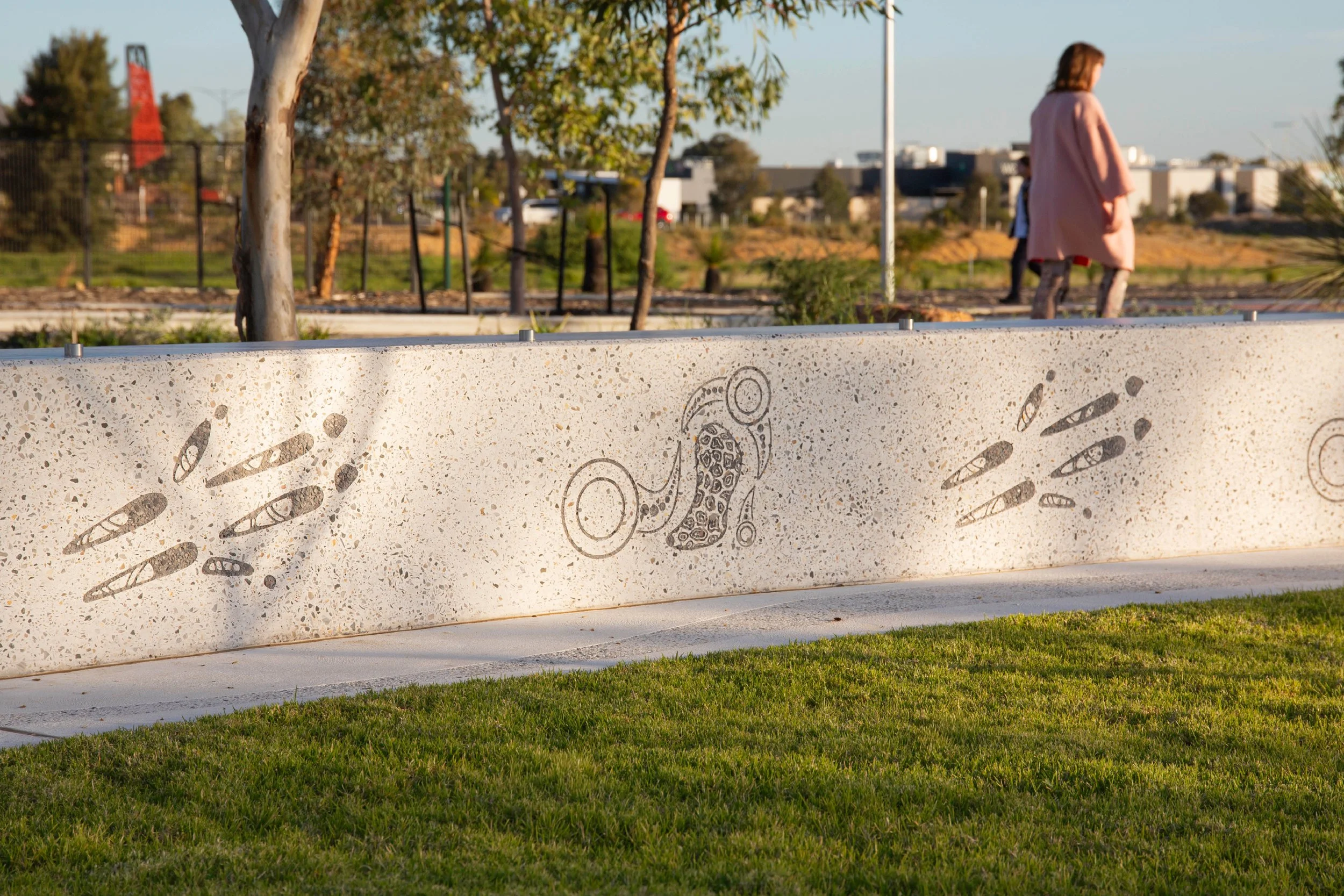
Byford Station, with Nigel Chadd’s integrated artwork ‘Booldjit’. Photo by Yvonne Doherty
The METRONET Byford Rail Extension has extended the Byford Line (previously known as the Armadale Line) approximately 8 km south, connecting Armadale with Byford, one of Western Australia’s fastest-growing communities. UDLA’s landscape architecture shapes the public realm around both new station precincts. This includes bus interchanges, parking, pedestrian connections and a series of public open spaces that turn the stations’ modular architecture into places for their communities.
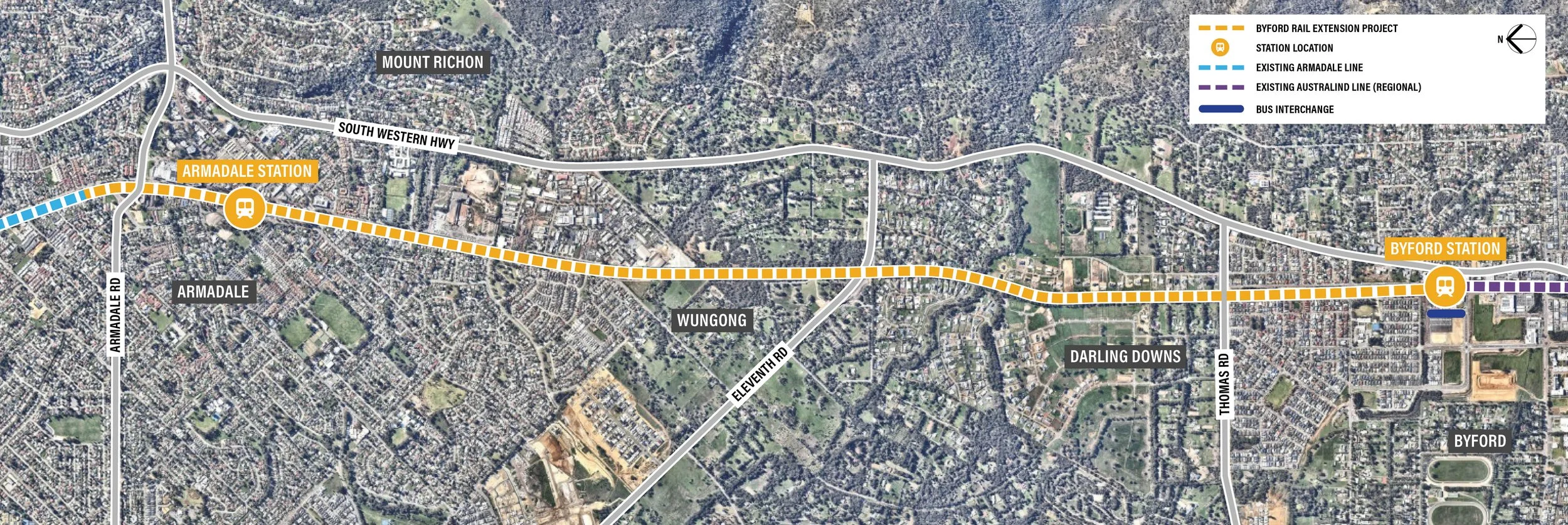
The Byford Rail Extension delivers approximately 8 km of new electrified rail and two new station precincts, removing level crossings along the corridor between Armadale and Byford.
A shared set of principles guided the design of both precincts: clear and intuitive, safe and welcoming, trees and shade, multi-functional, and culturally and socially inclusive. Within this line-wide framework, each station responds to its own setting – an elevated civic gateway at Armadale and a ground-level precinct at Byford that anchors future town centre growth.
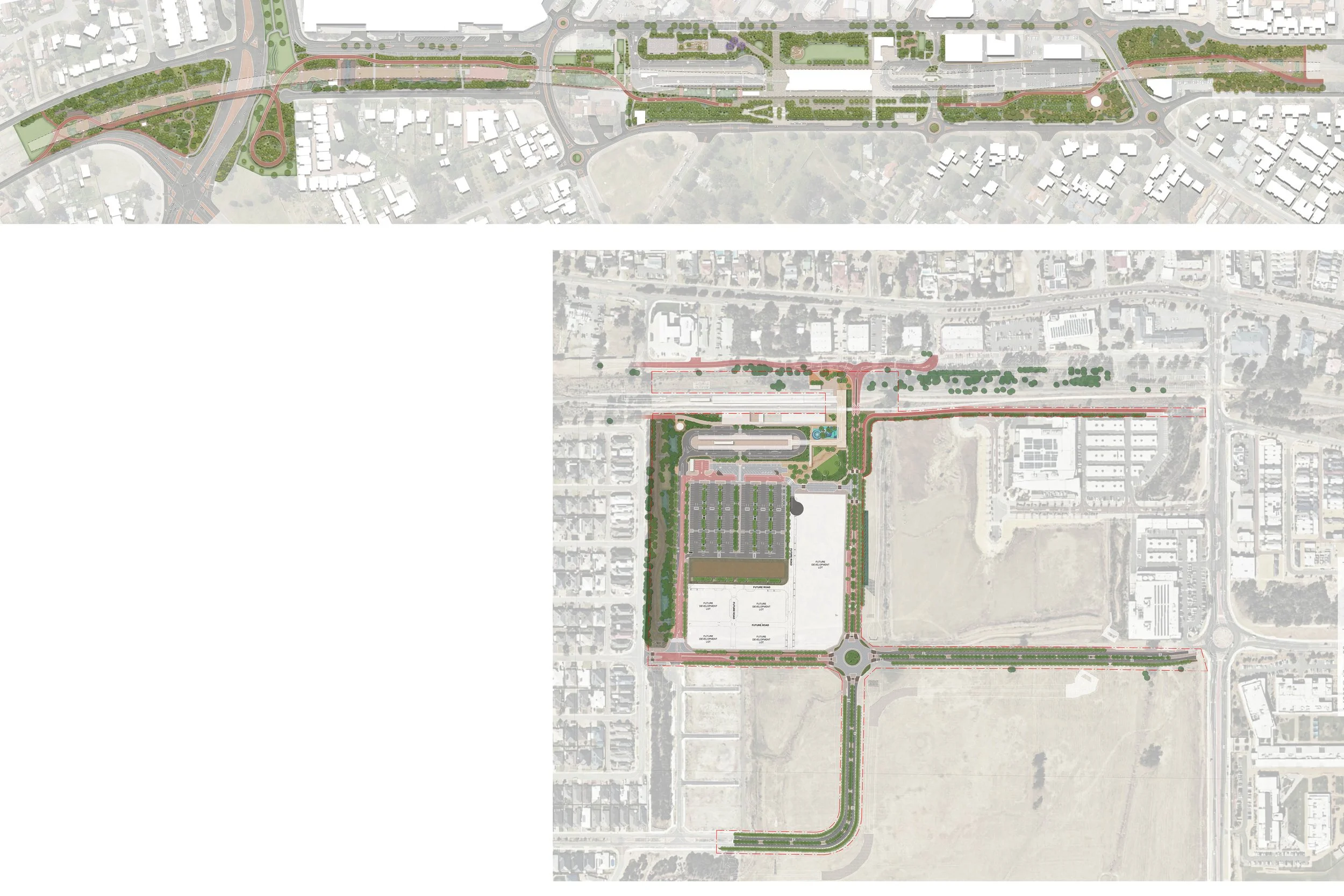
Top: Armadale Station. Lower: Byford Station
At Armadale Station, elevating the transport infrastructure removed three level crossings and opened the ground plane to a new civic centre organised around three linear themes: community, transport and Country. A central hub links a plaza for markets and events, an urban lounge for arrivals and departures, junior play and a chill zone along an urban forest edge. North–south connections are strengthened to encourage walking and cycling.
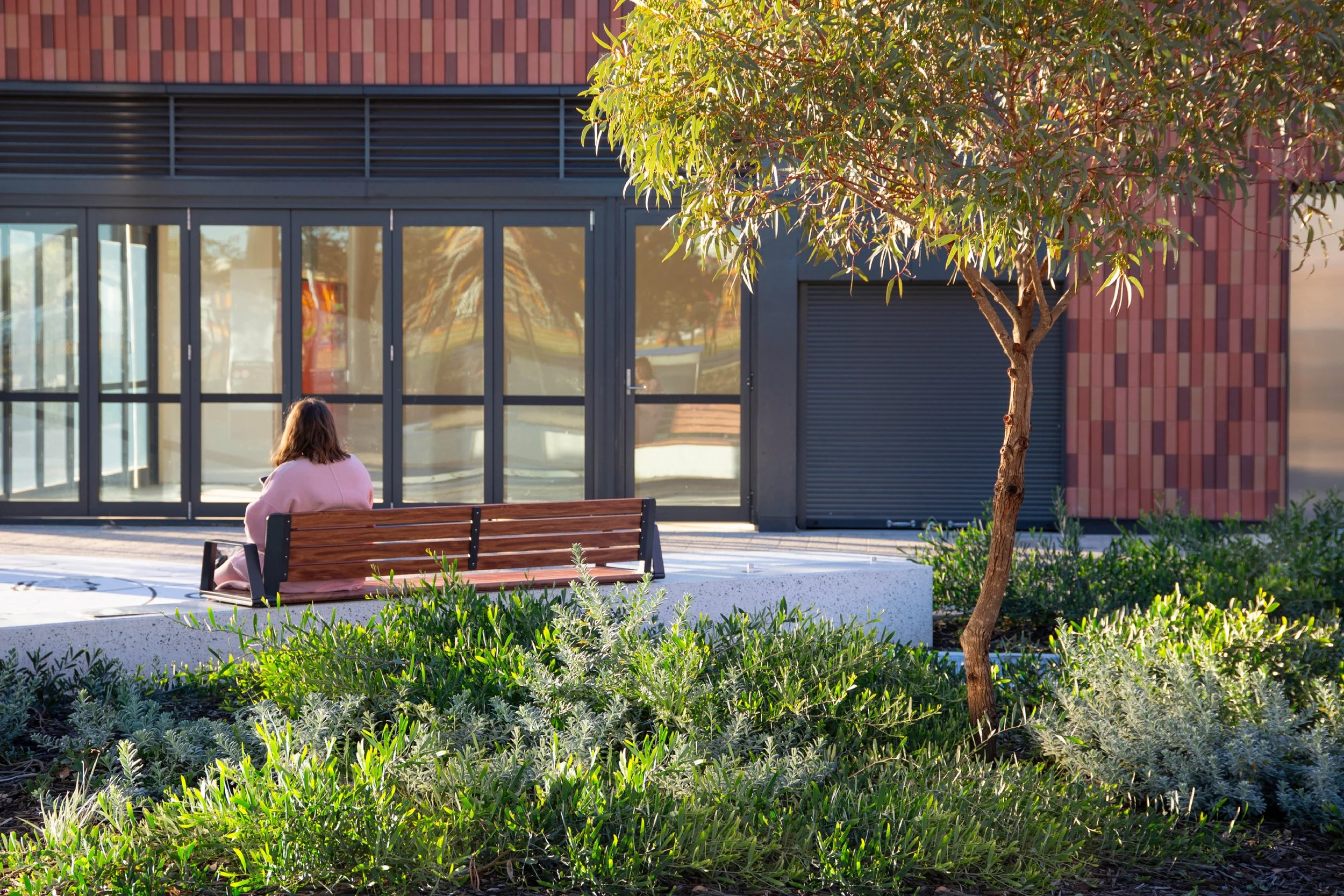
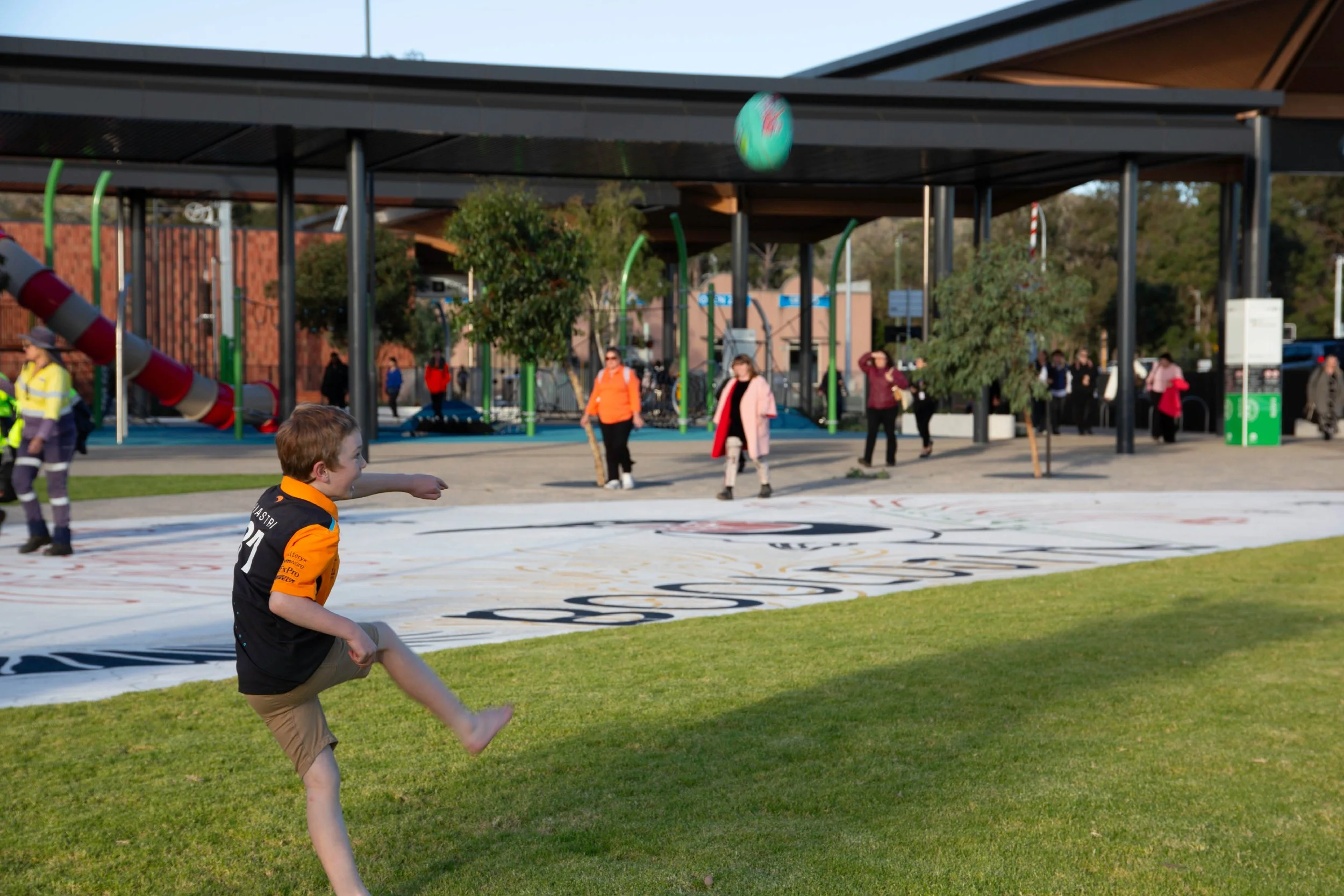
At Byford, a more informal approach reflects the precinct’s role as a gateway to the town centre and the Darling Scarp. Three linked spaces – an arrival court for respite, a multi-use space for events and gathering, and a nature-themed playspace – are woven together with welcome gardens. Approximately 200 transplanted mature Balga give the precinct presence from day one.
Sense of Place Statements, capturing the histories and stories of Noongar and non-Noongar people, informed the design of both precincts. At Armadale, the design was further shaped by the Beenyup Noongar Cultural Context Document and by Aboriginal Cultural Advisor Noel Morich under the Gnarla Biddi framework.
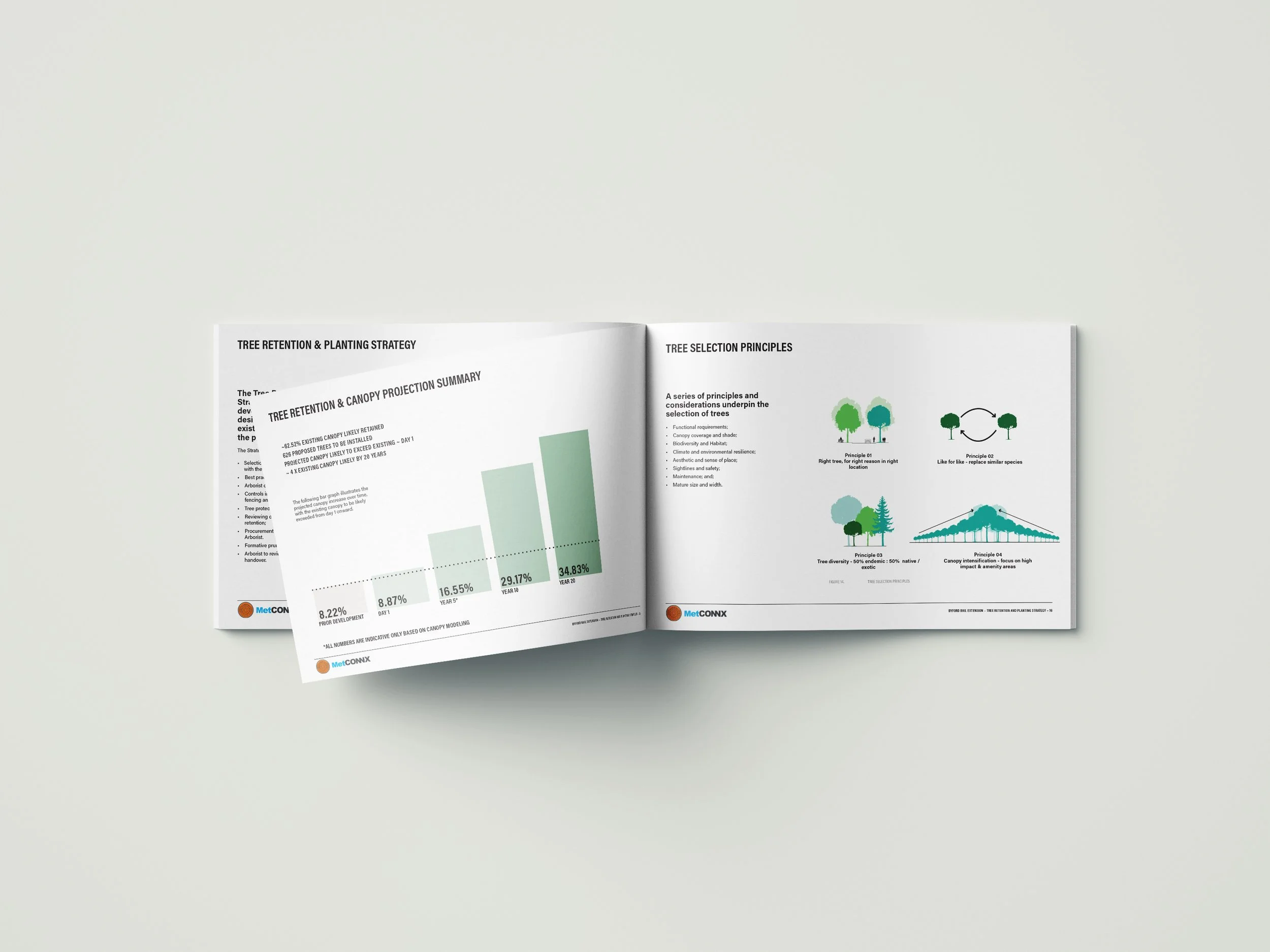
METRONET Byford Rail Extension - Tree Retention Strategy (UDLA & Arboribus)
As part of the project, UDLA worked with arborist Arboribus, the project team, the City of Armadale and the Shire of Serpentine Jarrahdale to develop a Tree Retention Strategy for the corridor. The strategy defined Tree Protection Zones and shaped alignments and construction methods to minimise impacts. As a result, the project retained a substantial proportion of existing trees while delivering a net gain in canopy.
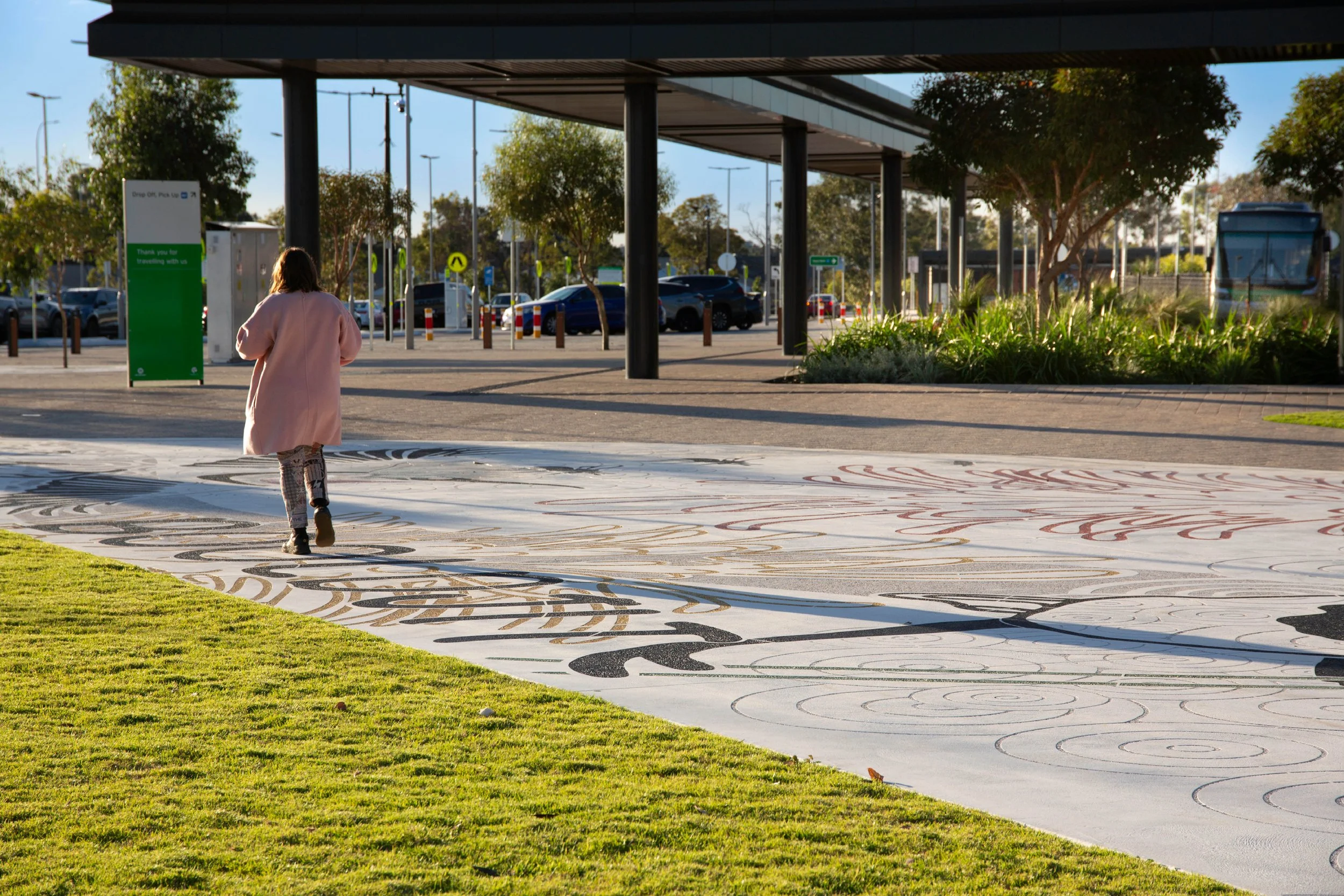
Byford Station, with Nigel Chadd’s integrated artwork ‘Booldjit’. Photo by Yvonne Doherty
Both stations function as multi-modal hubs, with new bus interchanges, parking, kiss-and-ride, and clear, shaded pedestrian and cycling routes across the rail corridor. The result is a cohesive line-wide public realm that celebrates local identity and gives transit-oriented communities room to grow.
Awards:
Engineers Australia Excellence Awards – Project of the Year (WA)
CCF WA Earth Awards – Project Value Greater than $150 Million
Details:
Client: Laing O’Rourke, for METRONET
Aboriginal Country: Whadjuk Noongar
Location: Armadale and Byford, WA
Dates: 2022 - 2025
Landscape Architect: UDLA
Collaborators: Weston Williamson + Partners (Architects, Lead Consultant), Hames Sharley, Colliers (Pritchard Francis), Arboribus (Arborist, Tree Retention Strategy), Apparatus (Public Art Consultant)
Artists: Seantelle Walsh, Dellas Bennell, Nigel Chadd, Mel McVee, Haylee Fieldes, Sioux Tempestt, Amok Island, George Domahidy, Tony Jones
Photography by Yvonne Doherty


The Oval is the first stage of DevelopmentWA’s Subi East Redevelopment, transforming the former Subiaco Oval into community-focused public spaces that celebrate local heritage, sport, culture and Country.